Friday, August 8, 2008

A Glimpse into the Past...


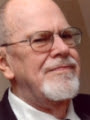
Jim's eBook, Parish, was recently added to the Cleveland Memory Project, which is a showcase for some of the special collections at Cleveland State University. As anyone who has grown up in a Catholic family knows, the traditions impact all that you are and all that you grow to be.

In Jim's own words:

"This is a memoir about growing up Catholic but it has nothing to do, or everything to do, with religion. I was born in Cleveland, Ohio...last child in a family that was, as my father put it, two potatoes away from being dirt poor. For those days, at the beginning of the Great Depression, that was not too bad.

"Though my childhood was fenced in by poverty and I knew the ungenerous consequences of class, it was, to paraphrase from my favorite novel, 'the worst of times, it was the best of times.' I grew up in a cocoon, an Irish Catholic Parish."

The entire contents of the book are available at the Cleveland Memory Project for those wishing to take a look at the past of this fascinating guy.

Friday, July 18, 2008

Exciting News for the Heapheys


Newsflash!

The Heapheys made their safe and triumphant return from Cyprus in mid-June and discovered, quite happily, that Jim's newest book How to Survive in an Organization had been released by History Publishing Company to favorable reviews. Jim equates How to Survive to a jungle survival guide for rational, reasonable, frustrated people stuck in the confines of an organization with no light at the end of a very long tunnel. It's chock full of strategies, tactics, and stories that will not only provide great advice and information, but also keep you engaged and entertained.

Jim has also recently completed work on his own website.

Since Pam has returned, she is working on more stories about their trip to Cyprus that could not be published while they were still traveling. Stay tuned...

Friday, May 23, 2008

Simple Beauty in a Chaotic World

Notes from Cyprus
The AEOKA/GRIVAS MUSEUM IN PAPHOS

The coast line North coast Paphos is becoming so overbuilt with seaside hotels and villas that one hardly ever looks anywhere but the road which is actually a good thing as they have the highest per capita accident rate in the world. Considering this, both the mind and the eye do a double take when the blue green of the Mediterranean suddenly appears framed by lush green plantings – a ribbon of color between the continuing beige of even the luxury hotels. The building this swath of color takes your eye to is noteworthy in its’ simplicity and its’ pure whiteness against the incredible blue of the sea and the sky.

It is the AEOKA MUSEAM and its’ centerpiece is the fishing Trawler that returned George Grivas, the militant super Hellenist and military leader, to Cyprus after years of exile. His mission was to set up a strong military and terrorist fighting force that could return the island
to the Greeks.

Hellenism is still a major issue here even after joining the EU. It is not surprising to see more Greek flags flying that those of the Republic of Cyprus. School children are still taught that Turks are evil and stupid. This indoctrination continues though compulsory military duty.

Inside the building is the boat. Now beautifully painted a shiny white with green trim, interesting because green is the Muslim color, it far from resembles the storm tossed purposefully inconspicuous gun runner working fishing craft it once was. It is about 40 feet long and some 12 feet wide. In 1955 she dropped Grivas and 5 others near the village of Chlorakas just north of Paphos which was then in the boondocks. They and 8 others were caught in January of 1955 and the Walls are covered with the Greek version of their trials etc.. No British versions allowed.

Just outside the rear of the building standing on the shoreline is and over sized statue of Grivas in full military regalia. Behind the statue is a stunning monument of gold and silver rods reaching for the sky with a horizontal crosspiece that parallels the horizon.

Even early on a Saturday morning there are many people here, mostly Greeks. They are all dressed up, young and old; grandfathers holding their grandchildren’s hands. They walk slowly around.

It is as quiet as a church.

Oops

Corrections from the Desk of Pam

First and Foremost: Alan is from Scotland and Liz from Wales. They are NOT English!! My apologies for the lapse to both!

Second: My blog about the ancient history of Cyprus makes it appear that it all began with the Greeks 3500 years ago and of course it is much more complex than that and extremely interesting but not really bloggy.

There will continue to be corrections as I learn more. How cool is that!!

Wednesday, May 14, 2008

There's no place like...Iowa?

A Brief History of Where We Think We Are
A Note from the Desk of Pam

All of a sudden I realized that here we are an the island about which people know little. It just isn’t in the news much. So my “notes” etc. might mean more if I provided a framework.
Here goes:

Cyprus is the easternmost island in the Mediterranean, very close to Turkey, some 40 miles to the north. You can actually see Turkey on a clear day from Mt. Olympus, the highest point on the island.
It is roughly the size of Long Island. The southern two-thirds is Greek with a population of around 650,000 plus some 100,000 immigrants many of whom are British expatriates.
There are some 80,000 Turks in the northern one-third. They are divided from the Greeks by a UN-patrolled “Green Line.” The area between the two sides is known as “The Dead Zone.”
The British military have three sovereign bases on the island because its location provides unparalleled opportunities for electronic spying on the Middle East, Northern Africa, and Russia. The Americans use the three sovereign areas – for example, U2 flights are from a British air base – and have two of their own in the northern panhandle of the island.
There are two mountain ranges – the Troodos and the Kyrenian – which are green and lovely, while the much more heavily-populated coast is very arid, very Middle Eastern, with signs of ancient mining, terracing for vineyards etc.
The island was first settled by Greeks about 3500 years ago. Despite having been ruled by Phoenecians, Lusignians, Venetians, Turks and Brits over the centuries, which has undoubtedly affected the gene pool, southern Cypriots consider themselves Greek. The Greek flag is flown everywhere and more than the Cypriot flag.
Hellenism – the idea that all Greeks, wherever they live, belong to the same world, culturally, politically, and religiously has been around since Alexander the Great. In the 1950s this idea took a violent turn with a militant group called EOKA which was committed to ENOSIS, union with Greece. The enemy was the British military because at that time Cyprus was a British colony.
ENOSIS is anathema to Turkish-Cypriots. They believe that if Cyprus were part of Greece they would be annihilated. This conflict over ENOSIS led to the Turkish invasion and subsequent occupation of 1974. The occupation forced a number of Greeks to leave their homes and live further south. Likewise, those Turks who lived in the south were forced to leave their homes and live in what is now controlled by the Turkish Army. One of the grim results is villages emptied of people on both sides of the Green Line.
When the dust settled, the south became an internationally-recognized Republic and was admitted into the European Union. The Turks established their own Republic but it is not recognized by any country other than Turkey.
I might leave the wrong impression saying “when the dust settled.” The bullets and bombs have been set aside but the animosities are as alive as they have ever been. For the Greek-Cypriots this island is and will always be part of the Hellenic world. For the Turkish-Cypriots this island was meant geologically to be part of Turkey. If one looks at a map one can see why.
So you have an island split by beliefs that are so ancient the hope of an amicable settlement is just about nil.

But then again maybe we’re in Iowa.

Monday, April 21, 2008

Pam's View

At first you don’t notice it. Like so many things beige, muted, dusty in color – they melt into the background. This is especially true in a new country that was formerly a British colony where one tends to concentrate on the mechanics of getting from here to there while driving on the wrong side of the road.
It is amazing how long it takes to start noticing the absence of things! At first it is groups of empty lots amidst construction of new buildings advancing at a ferocious pace. Then it is an old square stone house tightly shuttered, but progressively being taken over by nature, grass growing from its roof.
Next you notice several such houses clustered together; slowly being covered by vines, cyclamen, fennel, and other wild growths. Once they had been homes and businesses of Turkish or Greek Cypriots, depending on which side of the Green Line you are on. Legally they still are, but while the owners await decisions on the thorny issues of an unresolved conflict decisions to be made by people who have never seen them -- they sit unattended. Sometimes whole villages lie as if discarded – dust where lemons, flowers, and children should be growing.

Saturday, April 5, 2008

Like Two Peas in a Pod

A note from Pam about Friends

Friday morning Sue and Alan took us to meet a couple they thought we would enjoy – Hugh, who is a writer, antique car enthusiast, and general good guy around town, and his wife, Elizabeth, who is a bird watcher, good golfer, bridge player, and cook.

They are charming. Jim and Hugh hit it off right away. We will go to a book “launching” April 8 for his latest book, and he to Jim’s book-signing in May. In addition, he has gotten Jim involved with the Paphos Writers Club.

We thought we were just going for coffee, but we were feted with four savories, four sweets, and, oh, did I mention the champagne? All of this took place in a spectacular setting right above Coral Bay. Their property has pools and fountains and flowers galore. It is somewhat like a stage setting for a Greek Great Gatsby with a view to die for.

They are very English – the kind of English who have spent most of their career lives abroad can be the best kind. The kind who taught me the English way. Are you there, Miss Vickerey?

That day we found ourselves in a little piece of England that floated towards the warm sunny sky of the Mediterranean. In this place, much of the classic reserve has melted in the sun; we are not only accepted, we are welcomed as “American cousins.”

Since that day we have found Hugh and Liz extraordinarily kind, as are Sue and Alan. They have taken us under wing and check up on us to be sure we are well and have what we need. Hugh has come over a couple of times. It is such a drive. There is always a polite pretext of some sort, a smile, some kidding around; the sincerity and warmth of these two couples really touches the heart.